Field guide · December – April

Humpback whale behaviors, and what they mean

Humpbacks are the most active large whales at the surface, and off Maui in winter they are mating, calving and competing. Here is what you are likely to see, what it looks like, and what researchers think it means.

Check Dates & Book

How to read a whale

Most of a whale's life is underwater. What you see at the surface is a short window, and the same few behaviours repeat. Once you know what they are, you can start to guess what the whale will do next.

Whales come to Hawaiʻi to breed and give birth, not to feed. So almost everything you see here is social: mothers with calves, males competing, and males singing. The feeding behaviour you may have seen in Alaska does not happen here.

On our boat, an MWA certified marine naturalist names each behaviour as it happens. This page is the same commentary, written down.

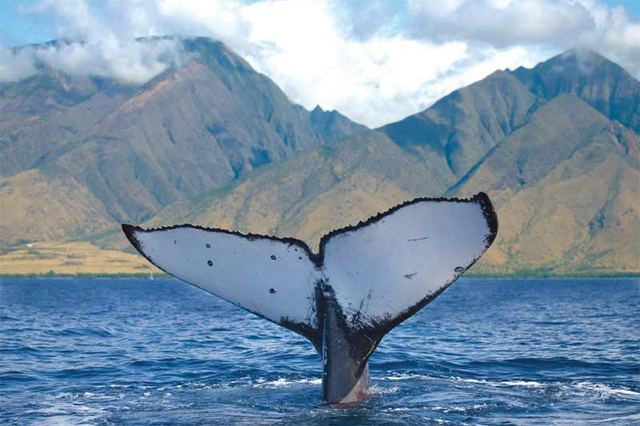
Humpback whale lifting its tail before a dive, West Maui Mountains behind

A fluke-up dive: the tail pattern identifies the whale

Breathing and diving

You will see these on almost every trip. They tell you where a whale is and roughly when it will be back.

Blow

What you seeA bushy column of mist, about fifteen feet high, and a sound like a long exhale if you are close enough. Often two or three in a row.

What it meansThe whale is breathing. Humpbacks usually take a few breaths at the surface and then dive. It is how we find whales: the blow is visible long before the whale is.

Fluke-up dive

What you seeThe back arches, and the tail lifts clear of the water, showing its underside, before the whale slides straight down.

What it meansA deeper, longer dive. Expect a wait before it comes up again. The black-and-white pattern under each tail is unique, and researchers use photographs of it to identify individual whales.

Fluke-down dive

What you seeThe back rolls over in an arch, but the tail stays low or under the surface.

What it meansUsually a shallower dive. The whale often surfaces again nearby, sooner.

Logging

What you seeA whale lying still at the surface, like a floating log, breathing slowly.

What it meansRest. Whales are thought to rest one part of the brain at a time while staying aware enough to keep breathing.

Surface displays

The big moments. None of them can be predicted or promised, but some days the channel is full of them. Competition pods form. Breaching, pec slaps and surface displays become routine.

Breach

What you seeMost or all of the whale leaves the water, then crashes back down on its side or back. The splash is visible from miles away.

What it meansNobody knows for certain. The main ideas are communication (the sound carries a long way underwater), play, and knocking off skin parasites. Breaches often come in runs, so keep watching the same spot.

Tail slap

What you seeThe whale lies face down, lifts its tail and slams it on the surface, sometimes again and again. Also called lobtailing.

What it meansProbably a signal to other whales, possibly a warning. The slap is loud underwater and carries a long way.

Pec slap

What you seeThe whale rolls on its side and slaps one of its long pectoral fins on the water. The fins can be up to fifteen feet long, and white underneath.

What it meansProbably communication. It is often seen in relaxed whales, including mothers and calves.

Spy hop

What you seeThe whale rises vertically, head and eyes out of the water, and holds still for a few seconds.

What it meansIt is looking around above the surface. Sometimes at the boat.

Head lunge

What you seeThe whale pushes its head forward and up out of the water, then crashes down.

What it meansA show of strength or aggression. Mostly seen between males in competition pods.

Peduncle throw

What you seeThe whale swings the whole back half of its body sideways out of the water, tail and all.

What it meansOne of the most aggressive displays humpbacks make. Usually part of a competition pod, aimed at a rival.

Mothers, calves and competition

The groups you see tell you what the whales are doing here. By March: mother-and-calf pairs close to shore in calm morning water.

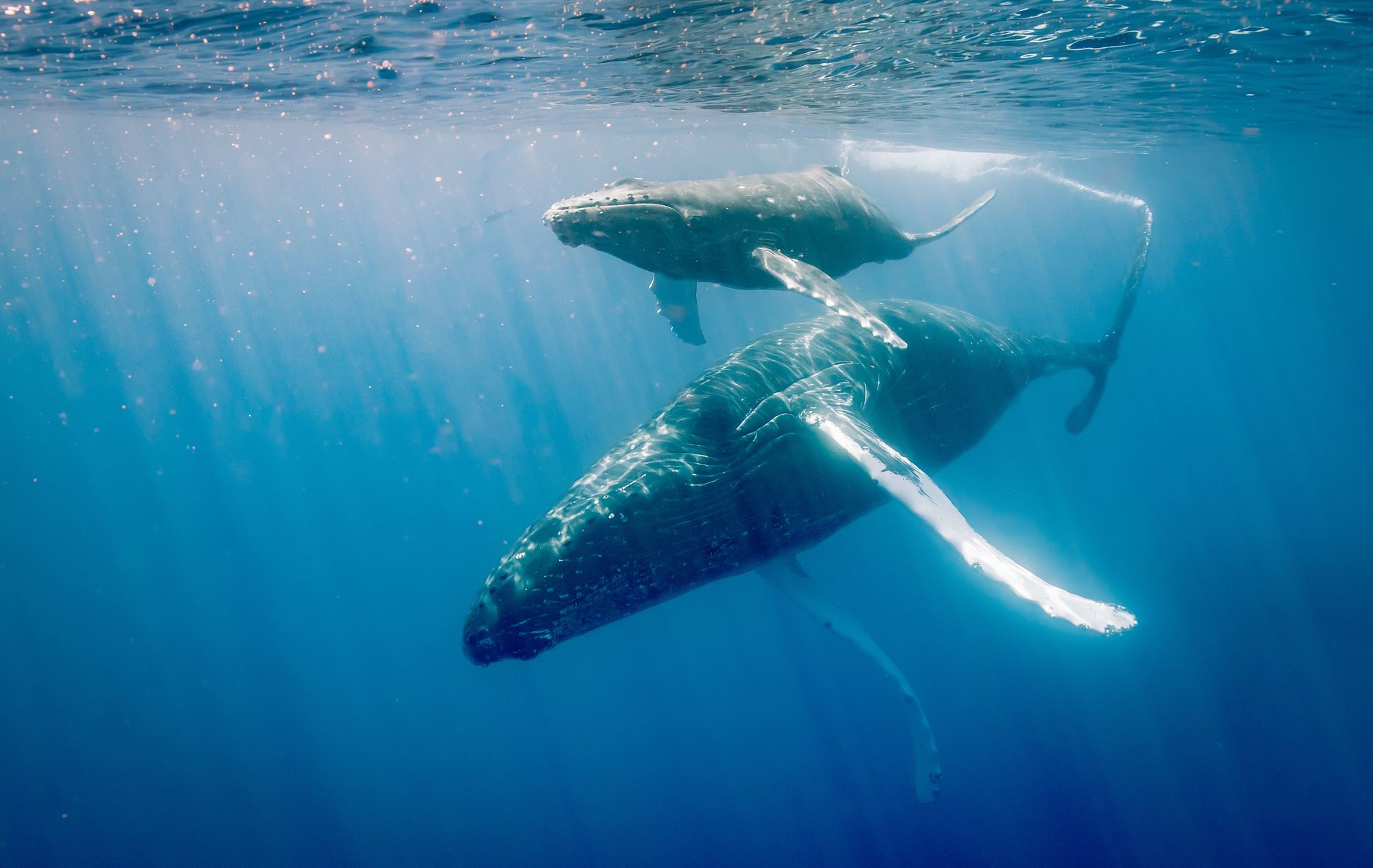
Humpback mother and calf below the surface off Maui

Mother and calf

What you seeA large whale and a small one, very close together. The calf surfaces more often than its mother, sometimes every few minutes.

What it meansThe calf was probably born in Hawaiian waters that season. Calves are 10–15 ft long at birth and gain around 100 lb a day on their mother's milk. The mother is fasting. Pairs favour calm, shallow water near shore.

Escort

What you seeA mother and calf with a third, adult whale travelling with them.

What it meansThe escort is usually a male. He may guard the pair from other whales, and he may be hoping to mate with the mother.

Competition pod

What you seeSeveral whales moving fast together, surfacing hard, with head lunges, tail slaps and peduncle throws.

What it meansMales competing for a female at the front of the group. They charge, block and strike each other. It is the most intense behaviour you can see off Maui, and it can go on for a long time and cover a lot of water.

The song

Only male humpbacks sing, and off Hawaiʻi they sing mostly in winter. A song is a sequence of moans, whoops and groans in repeating phrases. One song lasts roughly ten to twenty minutes, and a male may repeat it for hours.

All the singing males in Hawaiʻi sing the same song at the same time. The song slowly changes through the season and from year to year, and the whole population changes with it.

Why they sing is still debated. NOAA's researchers think it is mainly a display aimed at other males, a way of showing fitness, rather than a love song to females.

You cannot hear any of it from the surface. We carry an onboard hydrophone, broadcast to the whole vessel. In January, February and March there is often more than one singer at once.

What you will see on one trip

Every trip is different, and we will not pretend otherwise. Blows and dives you will see on almost every trip in season. Breaches and slaps are common but come and go with the whales' mood and the time of year. A competition pod is a good day. A spy hop near the boat is a very good one.

The best way to see more is to be patient and quiet. Whales often come to a boat that is sitting still with the engines off, and many of our closest sightings happen that way.

For when to come, month by month, see the whale season guide. To look for these behaviours from land, see whale watching from shore. To photograph them, see whale photography.

See it with a naturalist

2 hours on the water from Kaʻanapali Beach, with a hydrophone in the water and a naturalist naming what you see. From $79 per guest.

Check Dates & Book