
01 — The nursery
Why the whales choose Maui
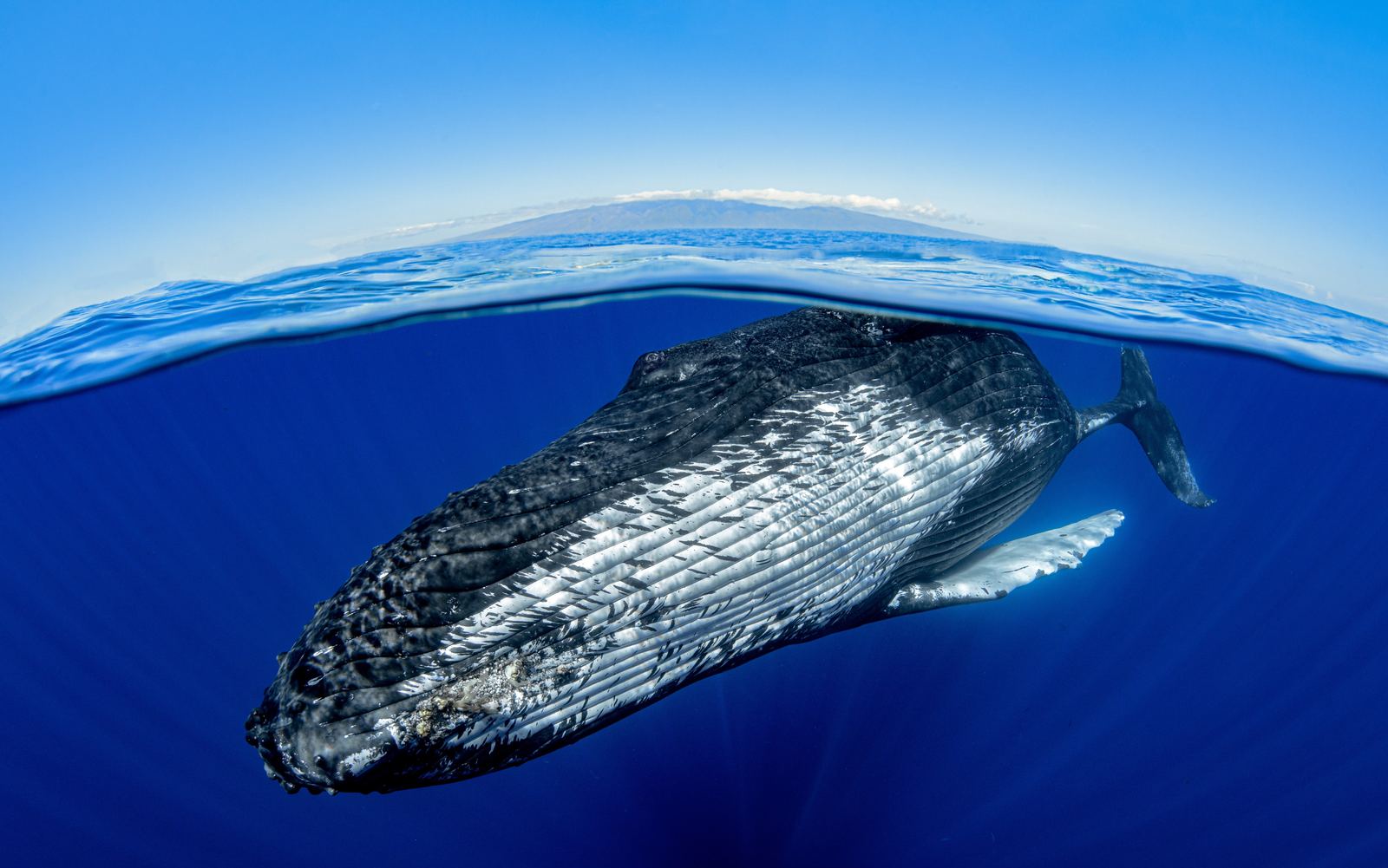
The water between Maui, Lānaʻi and Molokaʻi — the Auʻau Channel — is the single most important humpback nursery in the North Pacific. It is shallow, rarely deeper than about 300 feet, and wrapped on three sides by high islands that block the trade winds. The result is warm water, flat water, and very few large predators. For a newborn calf with almost no blubber and no swimming stamina, those three conditions are the difference between surviving the winter and not.
Hawaiʻi has no krill and no bait balls worth chasing, so the whales do not come here to eat. Adults arrive fat from a summer of feeding in Alaska and spend the entire Hawaiian season fasting, living off blubber laid down between May and October. Everything they do here is about the next generation: courting, mating, calving, nursing.
02 — The journey
A 3,000-mile crossing
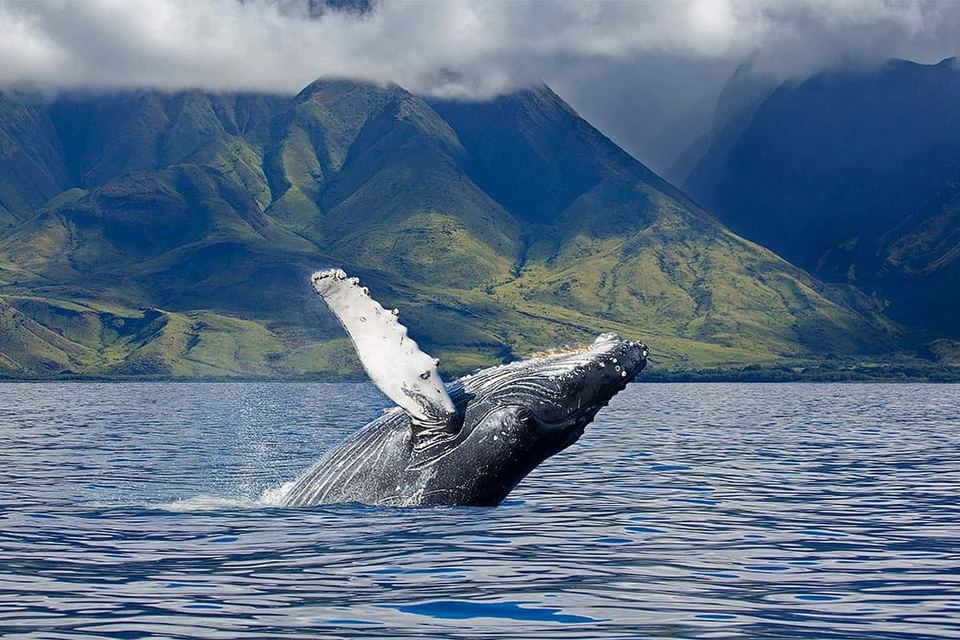
Breaching in the Auʻau Channel, West Maui Mountains behind
The run from southeast Alaska to Hawaiʻi takes most whales somewhere between four and eight weeks of nearly continuous open-ocean swimming, with no land, no shelter and no food along the way. It is one of the longest mammal migrations on Earth, and it is made twice a year, every year, for a lifetime that can run seventy years or more.
Pregnant females and mothers with yearlings tend to leave Alaska first and arrive earliest. Juveniles and adult males follow. By February the population in Hawaiian waters peaks, and the channels off West Maui hold the highest density of humpbacks anywhere in the islands. In April the order reverses: males and juveniles head north first, and mothers with new calves leave last, staying behind to let their calves put on weight and strength.
One of the longest mammal migrations on Earth — made twice a year, every year, for a lifetime that can run seventy years or more.
03 — Timing
Month by month
Season officially runs December through April. If you have flexibility, aim for the middle of it.
| Month | Activity | What's happening |
|---|---|---|
| November | Light | First scouts appear off West Maui. Sightings possible but not dependable. |
| December | Building | Season opens. Numbers climb week over week; pregnant females and mothers with yearlings arrive first. |
| January | High | Competition pods form. Breaching, pec slaps and surface displays become routine. |
| February | Peak | Highest density of the year. Calves are being born; singers are everywhere on the hydrophone. |
| March | Peak | Peak continues. Mother-and-calf pairs close to shore in calm morning water. |
| April | Departing | Males and juveniles head north first. Mothers with new calves linger latest. |
| May | Light | Final stragglers leave for the Alaskan feeding grounds. Season closed. |
04 — Field guide
What you'll actually see
Humpbacks are the most surface-active of the great whales, which is why Maui is such a good place to watch them. Your naturalist will name these behaviors as they happen. The field guide to humpback behaviors covers each one in full, and what it means.
Breach
The whale launches most of its body clear of the water and lands on its side or back. Loud, visible from a mile off, and still not fully explained.
Tail Slap
Also called lobtailing. The whale lifts its flukes and slams them down, repeatedly. Often a signal to other whales.
Pec Slap
Rolling on one side and slapping a fifteen-foot pectoral fin against the surface. Frequently seen in relaxed mothers and calves.
Spout
The exhale — a fifteen-foot column of mist. Usually the first thing you spot, and how the captain finds the pod.
Spy Hop
The whale rises vertically, head out of the water, and holds. It is looking at the surface world, and often at you.
Peduncle Throw
A full-force sweep of the tail stock sideways through the water. Aggressive, and usually part of a competition pod.
Competition Pod
Several males jostling around one female, charging and blocking each other. The most dramatic thing you can see in Hawaiian waters.
Fluke-Up Dive
The tail lifts clear as the whale sounds. Each fluke pattern is unique, like a fingerprint, and is how researchers identify individuals.
05 — Calving
Mothers and calves
Calves are born in Hawaiian waters at roughly ten to fifteen feet and a ton or more. They nurse on milk close to fifty percent fat and can put on about a hundred pounds a day — weight they will need for the crossing back to Alaska while their mother is still fasting. A mother and calf pair usually stays close to shore in calm water, surfacing every few minutes because the calf cannot hold its breath for long. Those are the pairs you most often meet off Kaʻanapali.
06 — Whale song
The song
Only male humpbacks sing, and they do it almost exclusively on the winter breeding grounds. A song is built from repeating themes and phrases, runs ten to twenty minutes, and is often repeated for hours at a stretch. Every male in the North Pacific population sings essentially the same song in a given season, and that shared song changes year over year — a genuine cultural transmission across thousands of miles of ocean. Drop a hydrophone in the water off Maui in February and you will hear several singers at once.
07 — Planning
Best time and place to watch
West Maui, from Lahaina up through Kaʻanapali and Kapalua, sits directly on the channel the whales use, which is why the best whale watching in Hawaiʻi happens here. Mornings are usually calmer; wind builds through the afternoon. Late January to mid-March is the densest stretch of the season. Because we launch off the beach at Kaʻanapali rather than out of a harbor, you are in whale water within minutes of leaving the sand.
For the whole picture — where the whales are, which boat to choose, how to prepare and the rules on the water — start with our complete guide to Maui whale watching.