Conservation
Responsible viewing
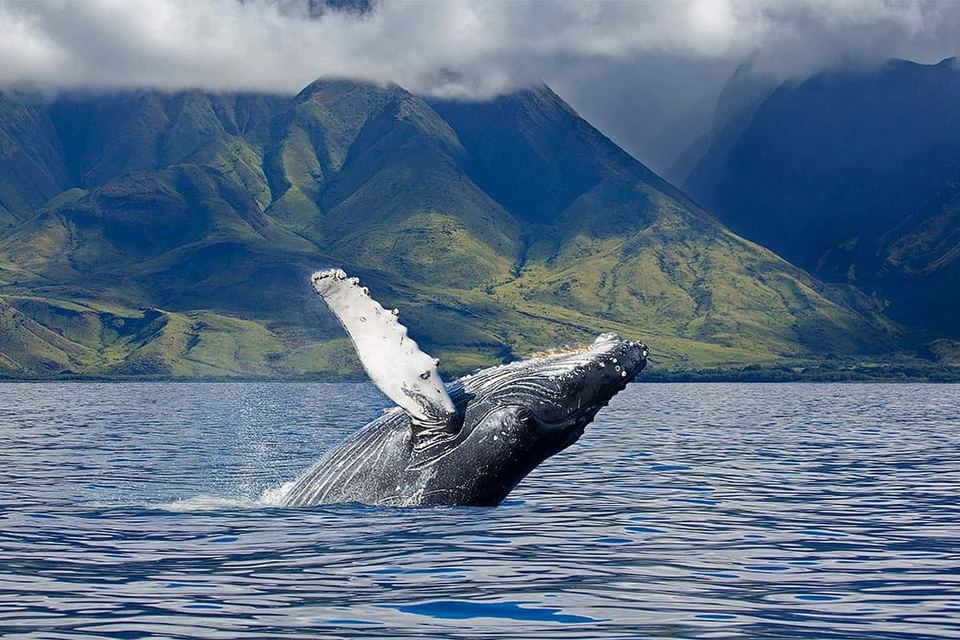
We operate inside the Hawaiian Islands Humpback Whale National Marine Sanctuary. The rules that protect these animals are also what make good whale watching possible — a calm whale behaves naturally, and a natural whale is the one worth watching.
The rules we run by
100-Yard Rule
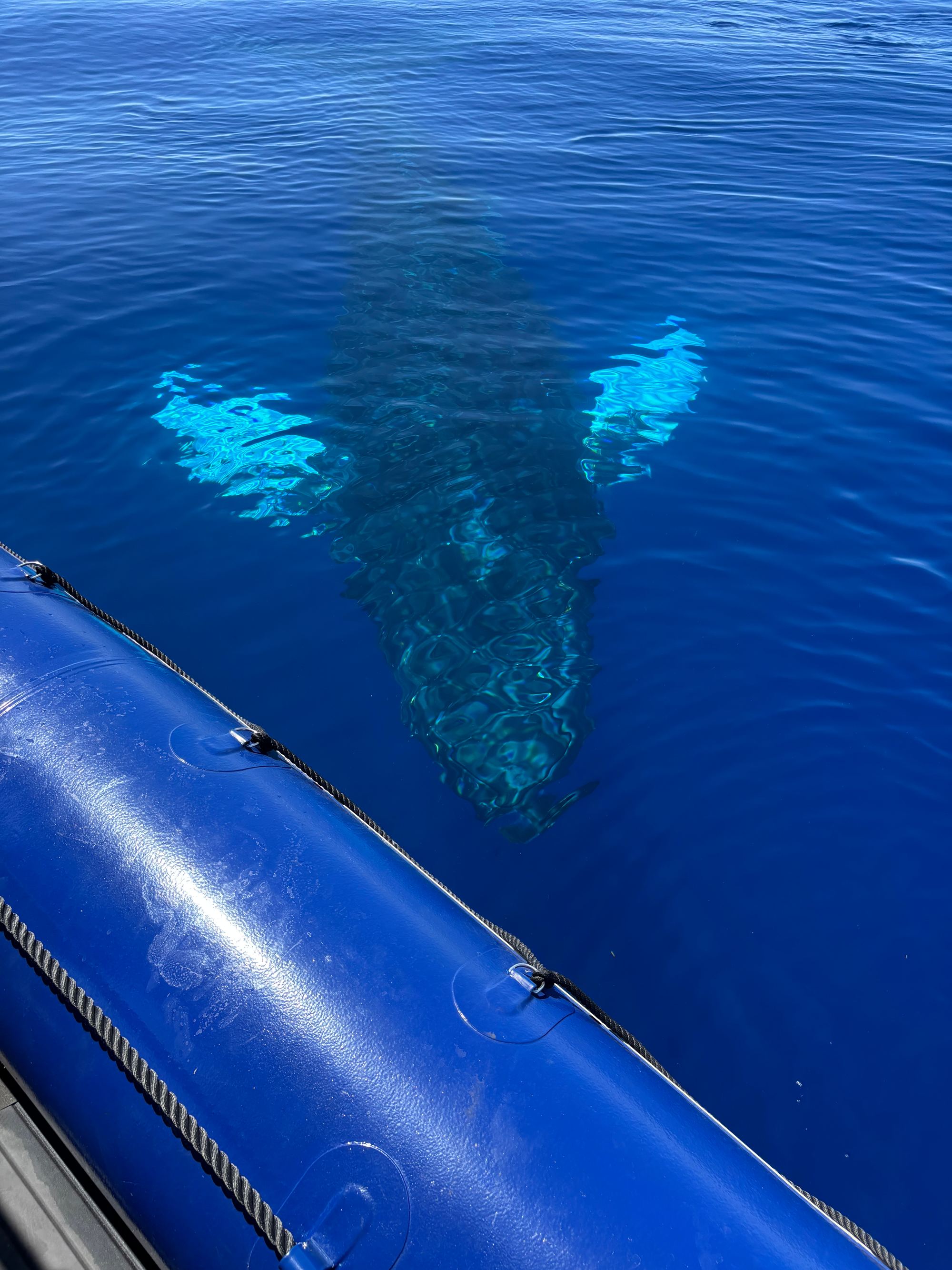
Federal regulations prohibit approaching a humpback whale closer than 100 yards in Hawaiian waters. We hold that line. Whales are free to approach us, and often do — which is why so many of our closest encounters happen with the engines off.
Engines Down, Not Chasing
We position and wait rather than pursue. Chasing changes a whale’s behavior, and a whale that is avoiding a boat is not one worth watching.
Never From Ahead or Behind
We never place the vessel directly in a whale’s path or run up on it from astern. Approaches are made from the side, slowly and predictably.
Extra Distance for Calves
Mothers with newborn calves get more room than the minimum. Calves surface constantly and cannot maneuver away from a boat.
Naturalist Aboard
A certified naturalist on every trip means guests learn what they are looking at — and the operation is watched by someone whose job is the whales, not the schedule.
Report and Record
We log unusual sightings and report entangled or injured animals to NOAA’s marine mammal hotline, 1-888-256-9840.
A recovery worth protecting
Commercial whaling reduced North Pacific humpbacks to a few thousand animals before it ended. The population that winters in Hawaiʻi has since rebuilt to the point where it was removed from the Endangered Species List in 2016 — one of the clearest conservation successes in the ocean. The whales remain federally protected under the Marine Mammal Protection Act, and the sanctuary rules still apply in full.
The threats now are quieter ones: vessel strikes, entanglement in fishing gear and marine debris, and underwater noise that interferes with communication over long distances. Every one of those is affected by how boats behave around whales.
If you see a whale in distress, entangled or struck, report it. NOAA's marine mammal hotline for Hawaiʻi is 1-888-256-9840.