
Before you go · December – April
Seasickness on a Maui whale watch
Most people are fine on a 2-hour trip. Some are not, and a few simple choices make a big difference. Here is what works, in the order it matters.
Check Dates & BookFirst, be honest about the boat
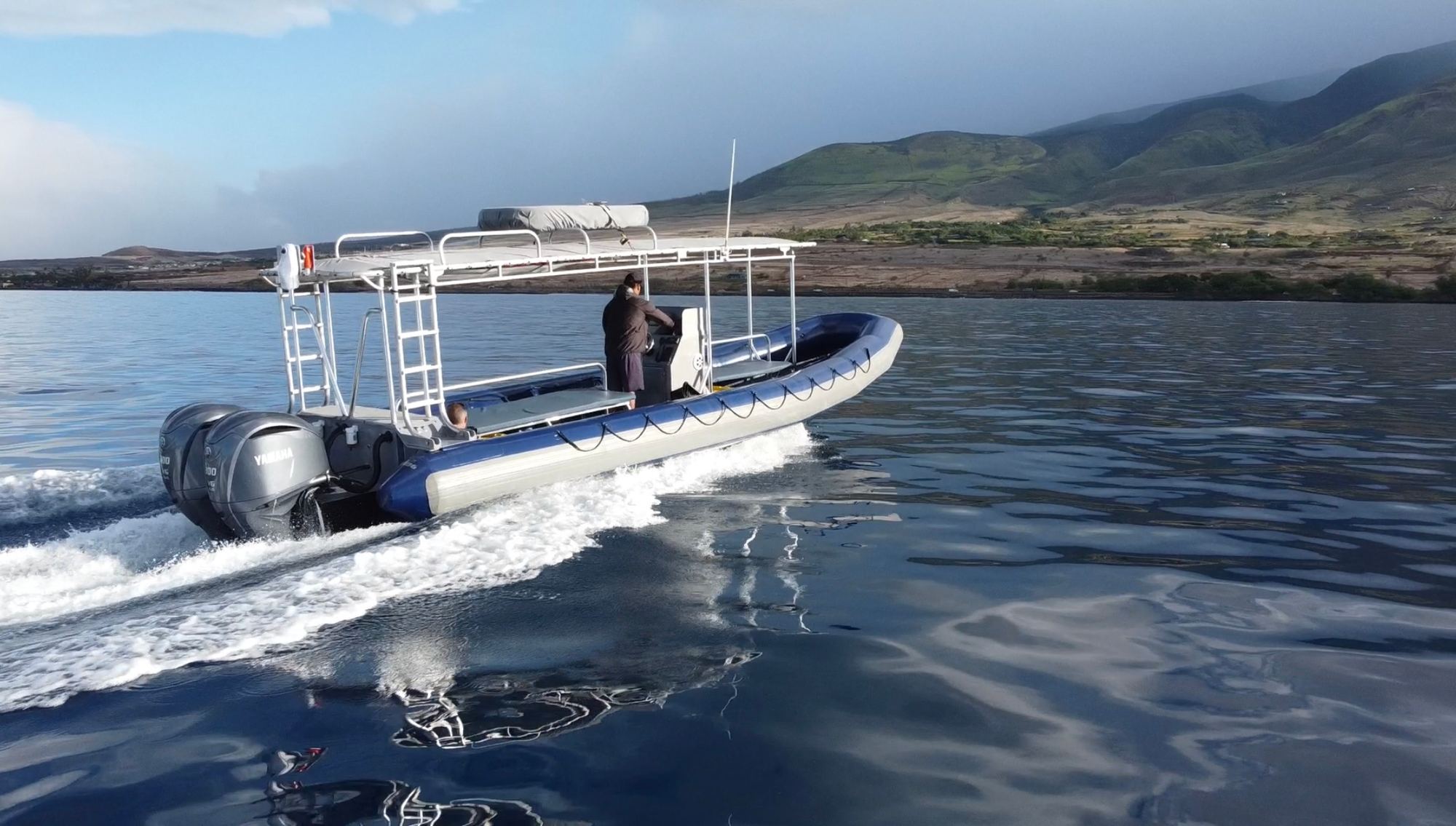
A RHIB is fast and stable but livelier than a large catamaran — you feel the water. Three things help: take the earliest departure, when the channel is calmest; take anything for motion sickness before boarding rather than after, because it works far better ahead of time; and keep your eyes on the horizon rather than on a phone. And always let the crew know if you start to feel seasick. We have a spot on the boat that usually helps, and we will move you there.
Seasickness happens when your eyes and your inner ear disagree. Your inner ear feels the boat moving. If your eyes are fixed on something that moves with you — a phone, a camera screen, the deck — your brain gets two different stories. Everything below is about making those two stories match.
What makes the biggest difference
1. Go in the morning
On most days the trade winds build through the late morning and afternoon, and the channel gets choppier as they do. Our first trip leaves at 7:00 AM. If you are prone to seasickness, book it.
Our sunset charter goes out in the late afternoon. The light is better. The water is often not.
2. Sit in the right place
The middle of a boat moves least and the front moves most. Sit amidships or toward the back, face the way the boat is going, and keep your head as still as you can.
3. Look at the horizon
The horizon is the one thing out there that does not move. Keep your eyes on it between sightings. Put the phone away while the boat is running. Check your photos later, on land.
4. Take medicine before, not after
If you use motion sickness medicine, the timing is the whole thing. Once you feel sick, your stomach absorbs tablets poorly, so they work much less well. See the medicine section below.
5. Sleep, and skip the drinks the night before
Being short of sleep and drinking alcohol both make motion sickness more likely. An early trip is a good reason for an early night.
Medicine: general guidance
This is general information, not medical advice. Ask your doctor or pharmacist what is right for you, especially if you take other medicines, have a medical condition, or are buying for a child.
The common options are antihistamine tablets sold for motion sickness, such as dimenhydrinate or meclizine, and a prescription scopolamine patch worn behind the ear. All of them work better taken ahead of time. Tablets need time to take effect before you board, and a patch needs several hours. Follow the label or your doctor's timing.
The main side effect is drowsiness. The patch can also cause a dry mouth, and it is not for children. For a child, ask your paediatrician before the trip, not on the beach.
If you start to feel sick
Always let the crew know. We have a spot on the boat that usually helps, and we will move you there. The earlier you tell us, the better it works.
Keep your eyes on the horizon, keep your head still, and breathe slowly. The boat is open, so you are already in fresh air, which helps.
It does not last. The trip is 2 hours, and most people feel better soon after they are back on the sand.
On rough days: If conditions are not safe we do not go out. You will be offered a reschedule onto another departure or a full refund — your choice. We would rather move your trip than run one in water that spoils it, and the captain makes that call on the day.
Quick answers
What is the best time of day for a whale watch if I get seasick?
Morning. The trade winds usually build through the day, so the channel is at its flattest early. Our first trip leaves at 7:00 AM. Calm water is also easier for spotting whales, so the early trip is the better trip on both counts.
Where should I sit to avoid seasickness?
In the middle or toward the back, facing forward, where you can see the horizon. The front of a small boat moves the most. Keep your head still and your eyes off your phone.
When should I take seasickness medicine?
Before you board, not after you feel sick. Once nausea starts, tablets are absorbed poorly and work much less well. Follow the label or your doctor’s timing, and ask a doctor or pharmacist which medicine suits you.
Is a raft worse for seasickness than a catamaran?
A raft is livelier. You feel the water more than on a big catamaran. The trip is also shorter, and you are out in fresh air with a clear view of the horizon, which helps. If you are very prone to seasickness, take the earliest trip, or choose a bigger boat.
Book the early boat
The flattest water of the day, and the whole day still ahead of you. The first trip leaves at 7:00 AM from Kaʻanapali Beach, behind Whalers Village.
Check Dates & Book