
The paved shoreline path from Hanakaʻoʻo Beach Park in the south to Kahekili Beach Park in the north. You are at sea level, so you will see blows and splashes rather than whole animals, but it is the easiest place on the island to look for a whale before breakfast.
From land · December – April
Where to see whales from shore on Maui
You can see humpbacks from almost any Maui beach that faces the channel. Here is where we would stand, when to go, what you will realistically see, and where the view from land runs out.
Check Dates & BookYes, you can see them from shore
Maui is one of the easiest places in the world to see a whale without getting on a boat. The humpbacks come to Hawaiʻi to mate and give birth, not to feed, and they favour shallow, sheltered water. On Maui that water starts a short way off the beach on the west and south coasts.
The season runs December – April, and January, February and March are the busiest months. Outside that window, there is very little to look for.
What you need: binoculars, a bit of height if you can get it, and patience. Most people who say they saw nothing gave it five minutes. Give it twenty.
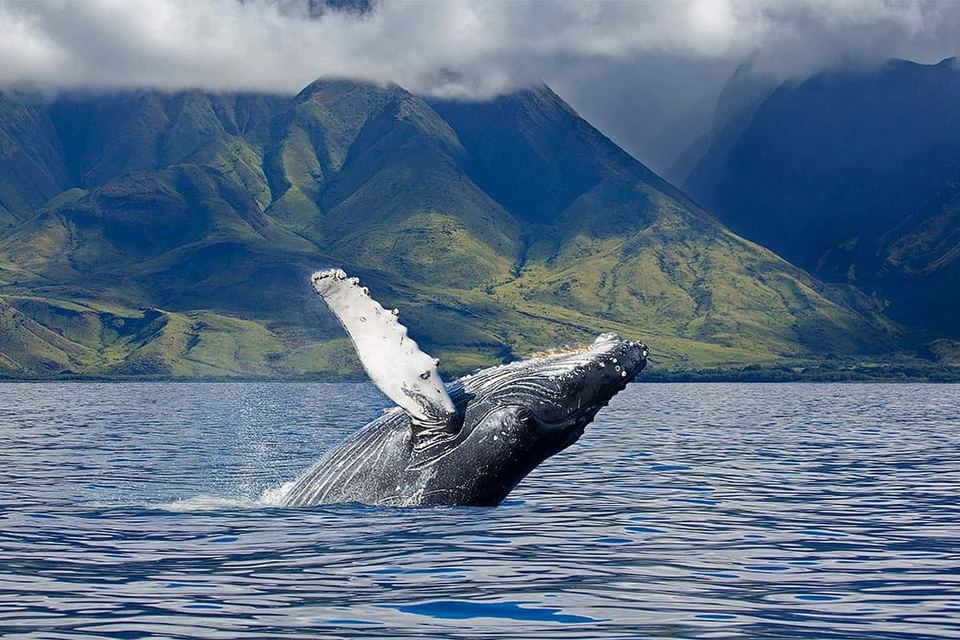
A breach in the channel, West Maui Mountains behind
Where to watch
Public places only, named as landmarks. Parking, restrooms, fees and access change, and we have not listed any of them — check locally before you go.
West Maui — Kaʻanapali to Kapalua
This is our home water. The ʻAuʻau Channel runs between here and Lānaʻi and Molokaʻi, and it is the part of Hawaiʻi with the most whales in it at the height of the season.
Kaʻanapali Beach Walk
Puʻu Kekaʻa (Black Rock)
The lava headland in the middle of Kaʻanapali Beach. A little height goes a long way from shore, and this is the nearest you get to it on the resort stretch.
Kapalua Coastal Trail
North of Kaʻanapali, running along low cliffs above the water. Longer sight lines than the beach and fewer people.
The Pali road — Māʻalaea to Lahaina
Honoapiʻilani Highway (Route 30) runs right along the water between Māʻalaea and Lahaina, looking across the channel toward Kahoʻolawe and Lānaʻi. It is where most visitors see their first whale, usually from a car.
Papawai Point
A signed scenic lookout on the ocean side of the highway, on a point above the water. Height and a wide view down the channel make it one of the best-known shore spots on the island.
McGregor Point
A second signed lookout on the same stretch, nearer Māʻalaea. Same view, from a slightly different angle.
Anywhere else on this road
Do not stop in the traffic lane or on a blind bend to look. Use a signed lookout or a proper pull-off, and let the passenger do the watching.
South Maui — Kīhei, Wailea, Mākena
The leeward south coast looks out over the same sheltered water from the other side. Worth knowing if you are staying there.
Kīhei shoreline
Long, straight beaches facing west over Māʻalaea Bay. Low, but open, and whales come into the bay.
Wailea
Headlands between the beaches give you a little elevation. Look out toward Molokini and Kahoʻolawe.
Mākena State Park
The end of the road south, with a wide view of the water between Maui and Kahoʻolawe.
When to look
Morning, for the water
The trade winds usually build through the day. Before they do, the channel is flat, and on flat water a blow stands out from a mile away. By mid-afternoon the same blow is lost in whitecaps. It is the same reason our first trip leaves at 7:00 AM.
Morning, for the light
The west and south coasts face the sunset. In the morning the sun is behind you and the water in front of you is lit. Late in the day you are looking into glare, which is lovely to photograph and hard to spot anything in.
Mid-season, for the numbers
Whale numbers peak in January, February and March. If you have a choice of days, those months give you the best odds from land. Month by month detail is in the whale season guide.
What you will realistically see
The blow first. A humpback's exhale is a column of mist about fifteen feet high, and it is almost always the first sign. Scan slowly, left to right, and watch for anything that hangs in the air for a second.
Then white water. A breach or a tail slap throws up a splash you can see from a long way off, even when the whale itself is too far to make out. Keep watching the same spot: whales that breach often do it more than once.
With binoculars, the shape. A dark back rolling through the surface, a tail lifting as the whale dives, a fin raised and slapped down. The field guide to humpback behaviour explains what each one means.
Sometimes, a mother and calf close in. Mothers with young calves favour calm, shallow water near shore, especially later in the season. They are the whales most likely to come near the beach.
The rules still apply on the beach
From the sand you are no trouble to a whale. The moment you go in the water, the rules apply to you. The federal 100-yard minimum distance covers swimmers, snorkelers, stand-up paddleboards, kayaks and drones as well as boats, anywhere in Hawaiian waters. Aircraft must stay 1,000 feet away.
If a whale surfaces near you while you are swimming or paddling, stop and let it pass. Do not follow it.
If you see a whale that looks entangled, injured or stranded, call NOAA's marine mammal hotline on 1-888-256-9840. More on how we watch in responsible whale watching.
What the boat adds
Shore watching is free and genuinely good. We would rather you do it than skip whales altogether. But there are three things you cannot get from land, and they are the reason people take a boat anyway.
Distance
From land, most whales are a long way out. On the water we stop at 100 yards and wait, and the whales often close the gap themselves. At that range you see the whole animal, not just a splash.
Sound
Male humpbacks sing, and all of it happens underwater. From the beach you hear nothing. Aboard, you hear it live. Onboard hydrophone, broadcast to the whole vessel.
Someone to explain it
A splash at a mile is a splash. On the boat, an MWA certified marine naturalist tells you what the whale just did and why.
When you want to be closer
Watch from the beach at dawn, then see the same whales from 100 yards. Season runs December – April.
Check Dates & Book